gamezone login Probability in Casino Games
Mastering GameZone Login: Probability in Casino Games
Welcome to the advanced guide on understanding probability in casino games. For seasoned players looking to refine their strategies and gain an edge, delving into the mathematical underpinnings of casino games is crucial. This article will equip you with the knowledge to approach your gaming sessions with a more analytical mindset, moving beyond mere luck. When you gamezone login, you're not just entering a world of entertainment; you're stepping into an environment governed by probabilities. Understanding these probabilities can transform your gameplay, allowing you to make more informed decisions, manage your bankroll effectively, and potentially increase your chances of success across various titles from JDB Gaming, AP Gaming, JILI Games, PS (PS Gaming), TP Gaming, VA Gaming, Wolf Gaming, and Play’n GO. This guide is tailored for the discerning player in the Philippines Market who demands more than just basic tips, offering deep insights into how probability shapes every outcome.
Table of Contents
- Introduction to Probability in Casino Games
- Expected Value and House Edge Explained
- Applying Probability: Specific Casino Games
- Understanding Variance and Risk Management
- Advanced Strategies & Probability Application
- Common Pitfalls and Misconceptions
- Frequently Asked Questions
Introduction to Probability in Casino Games
At its core, probability in casino games is the mathematical likelihood of a specific event occurring. Every spin of the slot machine, every card dealt in blackjack, and every roll of the dice in craps is governed by these mathematical principles. For advanced players, understanding the fundamentals of probability is not about predicting the next outcome with certainty, but rather about comprehending the long-term statistical advantage of the casino – known as the house edge – and how to mitigate its impact. This involves grasping concepts such as independent events, conditional probability, and the law of large numbers. While individual outcomes are random, over a large number of trials, the actual results tend to converge with the theoretical probabilities. This is particularly relevant for Online Casino platforms and Mobile-First Gaming Platform experiences where thousands of games are played daily. Familiarity with these concepts allows you to approach games like poker and blackjack with a strategic mindset, rather than relying solely on luck. Mastering these concepts is essential for any serious player in the Philippines Market.
Expected Value and House Edge Explained
The concepts of Expected Value (EV) and House Edge are paramount for any advanced casino player. The House Edge represents the casino's built-in advantage, expressed as a percentage of the player's initial bet that the casino expects to keep over the long run. For instance, a game with a 2% house edge means that, on average, for every ₱100 wagered, the casino expects to profit ₱2. Expected Value, on the other hand, quantifies the average outcome of a bet over an infinite number of trials. A positive EV means you're expected to profit over time, while a negative EV indicates an expected loss. Almost all casino games have a negative EV for the player due to the house edge. Advanced players focus on minimizing the negative EV or, in some specific scenarios like advantage play in poker or certain promotional offers, identifying opportunities for positive EV. Understanding these metrics helps you choose games wisely, manage your bankroll, and make informed decisions on when to bet big or small. This analytical approach is key to long-term success on any Gaming Platform, especially when using diverse Payment Methods like Maya, Fortunepay, BPI, UnionBank, DragonPay, Visa, and GCash.
Applying Probability: Specific Casino Games
Let's delve into how probability applies to popular casino games, providing advanced insights:
- Blackjack: Beyond basic strategy, advanced players utilize card counting (though difficult to implement Online Casino environments) or understand deviations based on remaining cards. The probability of busting changes significantly with each card dealt, making strategic decisions crucial. Knowing the probability of the dealer busting with a certain upcard is a powerful tool.
- Poker: Probability is the backbone of poker. Calculating pot odds, implied odds, and the probability of hitting specific outs (cards that improve your hand) are fundamental. Advanced players use these calculations to determine whether a call, raise, or fold is profitable in the long run. Understanding opponent ranges and their probabilities of holding certain hands further refines decision-making.
- Roulette: While seemingly simple, advanced players understand the different odds for various bets. European Roulette offers better odds than American Roulette due to the single zero. Knowing the precise probability of hitting a single number (1 in 37) versus a color (18 in 37) influences betting patterns, though the house edge remains constant for all bets except the 'five-number bet' in American Roulette.
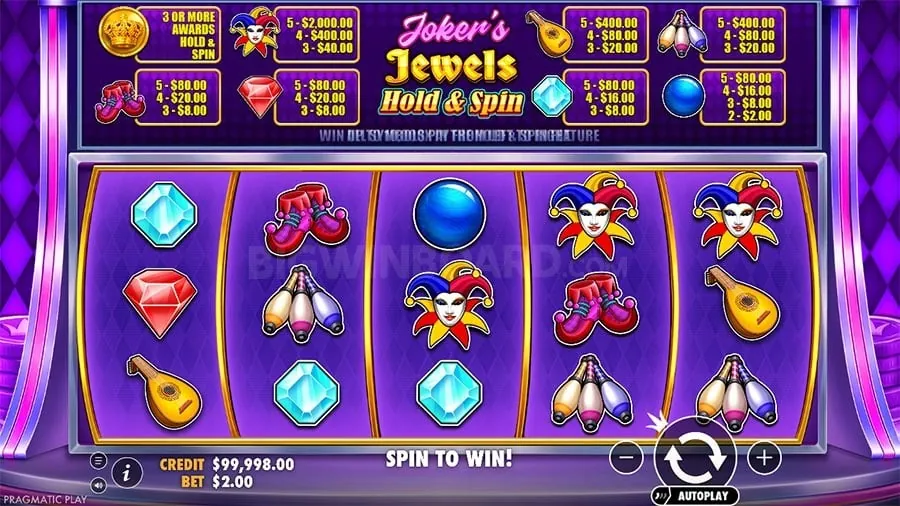
- Slots and Progressive Jackpots: For these games, the probabilities are largely hidden (RTP - Return to Player percentage). Advanced players focus on understanding RTP and volatility. High volatility slots offer less frequent but larger wins, while low volatility slots offer more frequent but smaller wins. For progressive jackpots, the EV can sometimes turn positive if the jackpot reaches a sufficiently high amount, making it a rare but calculated opportunity.
Each game requires a nuanced understanding of its specific probabilistic structure. Visit our platform to explore games from top providers like JDB Gaming and JILI Games and apply these insights.
Understanding Variance and Risk Management
Variance, in the context of casino gaming, refers to the degree to which actual results deviate from the expected value over the short term. Even with a sound understanding of probability and a positive EV strategy, short-term results can be highly unpredictable. A player might experience significant winning or losing streaks that don't align with the theoretical probabilities due to variance. For advanced players, effective risk management is about acknowledging variance and preparing for it. This involves proper bankroll management – setting aside a specific amount of money for gambling and never exceeding it – and adjusting bet sizes based on current performance and the game's volatility. A larger bankroll can withstand higher variance, allowing a player to ride out losing streaks until the long-term probabilities assert themselves. Conversely, a smaller bankroll necessitates smaller bets and a more conservative approach. Understanding variance helps prevent emotional decisions during swings and ensures that you can continue playing strategically over time. Learn more about responsible gaming practices on our official site.
Advanced Strategies & Probability Application
Moving beyond basic strategies, advanced players integrate probability into more sophisticated approaches:
- Optimal Strategy in Blackjack: While basic strategy is probability-driven, advanced players might consider specific card counting techniques (where applicable and legal) to alter their strategy based on the composition of the remaining deck. This involves calculating the probability of certain cards appearing next and adjusting bets and decisions accordingly.
- Poker Positional Play and Implied Odds: Advanced poker players use their position at the table to gain information, which in turn affects their probability calculations. Acting last allows them to see how opponents react, refining their assessment of pot odds and implied odds. This probabilistic advantage is significant.
- Martingale and Anti-Martingale Systems: While often criticized, advanced players understand the mathematical underpinnings of these betting systems. The Martingale attempts to recover losses by doubling bets, relying on the probability of eventually winning. The Anti-Martingale does the opposite, increasing bets after wins. Both have inherent risks related to table limits and bankroll, but their theoretical basis is rooted in probability.
- Bonus Hunting and Arbitrage: In the Online Casino space, advanced players might look for promotional offers with positive expected value. This involves calculating the wagering requirements, game RTPs, and bonus amounts to determine if the promotion offers a statistically profitable outcome. This requires a deep understanding of probability and game mechanics.
These strategies require discipline, keen observation, and a solid grasp of mathematical probability. Explore the diverse range of games offered by providers like TP Gaming and VA Gaming after you gamezone login.
Common Pitfalls and Misconceptions
Even advanced players can fall prey to common misconceptions about probability:
- Gambler's Fallacy: The belief that past outcomes influence future independent events (e.g., after a series of reds in roulette, black is 'due'). Each spin or roll is an independent event, and its probability remains constant.
- Hot and Cold Streaks: While streaks occur due to variance, attributing them to a 'hot' or 'cold' machine/dealer is a misconception. The underlying probabilities of the game do not change.
- Ignoring House Edge: Some players, even advanced ones, can overlook the persistent house edge in their calculations, leading to an overestimation of their long-term winning potential.
- Misunderstanding RTP: A high Return to Player (RTP) percentage (e.g., 96%) does not guarantee individual wins. It means that, over millions of spins, the game is expected to return 96% of wagered money to players collectively. Individual sessions can vary wildly.
- Over-reliance on Systems: No betting system can overcome the house edge in the long run for games of pure chance. While systems can manage betting patterns, they don't alter the fundamental probabilities.
Being aware of these pitfalls is crucial for maintaining a rational and strategic approach to casino gaming. Always remember that the house edge is a constant factor. For more insights and to test your strategies, visit our Gaming Platform.
Mastering probability in casino games is a continuous journey of learning and refinement. By understanding concepts like expected value, house edge, and variance, and by applying these insights to specific game strategies, advanced players can elevate their gameplay significantly. It's about making informed decisions, managing risk intelligently, and approaching each session with a clear, analytical mind. While luck will always play a role, a deep understanding of probability empowers you to maximize your potential and play smarter. Ready to put your knowledge to the test? Register now and explore the vast array of games and promotions available on our Mobile-First platform, designed for players in the Philippines Market. Your advanced gaming journey begins with a strategic gamezone login!
Frequently Asked Questions
Question 1: Can understanding probability guarantee wins in casino games?
Answer: No, understanding probability cannot guarantee wins in casino games. It helps you make more informed decisions, understand the long-term outcomes, and manage your bankroll effectively, but the inherent randomness and house edge mean that short-term results are unpredictable and losses are always possible. Probability provides a strategic framework, not a guarantee.
Question 2: How does the house edge affect my chances of winning?
Answer: The house edge is the casino's built-in mathematical advantage, ensuring that over a large number of plays, the casino will profit. It reduces your expected value for every bet, meaning that in the long run, you are statistically expected to lose a small percentage of your total wagers. Understanding the house edge helps you choose games with better odds and manage your expectations.
Question 3: Is card counting effective in online blackjack?
Answer: Card counting is generally not effective in online blackjack. Most online casinos use Random Number Generators (RNGs) that shuffle the deck after every hand, effectively negating any advantage gained from tracking cards. Live dealer blackjack might offer very limited opportunities, but even there, frequent shuffles and multiple decks make it extremely challenging to gain a significant edge.
Question 4: What is the most important concept for advanced players to grasp regarding probability?
Answer: For advanced players, the most important concept to grasp is Expected Value (EV). Understanding the EV of each decision or bet allows you to make choices that are mathematically sound in the long run, even if short-term outcomes vary. Coupled with effective bankroll management, a strong grasp of EV is crucial for strategic play.
Question 5: How can I apply probability to slot games?
Answer: While individual slot spins are independent and their probabilities are hidden, you can apply probability by understanding the game's Return to Player (RTP) percentage and volatility. Higher RTP slots theoretically offer better long-term returns. High volatility slots have a lower probability of frequent wins but a higher probability of large payouts, while low volatility slots offer the opposite. Choose games that align with your bankroll and risk tolerance.